CodeROI Adds AI Development Costs to Software Capitalization Ahead of FASB’s New Rule
MCKINNEY, Texas, Nov. 11, 2026

Press Release Disclaimer: This is a press release distributed through the XPR Media network. It has not been independently verified by our newsroom.

CodeROI Adds AI Development Costs to Software Capitalization Ahead of FASB’s New Rule
PR Newswire
MCKINNEY, Texas, Nov. 11, 2026
Most companies decide how much software development to capitalize using a year-end spreadsheet and a best guess. CodeROI now does it automatically, based on what engineers and AI tools actually worked on, and produces the project costs, schedules and monthly accounting entries your accountant needs. No timesheets. No surveys.
MCKINNEY, Texas, Nov. 11, 2026 /PRNewswire/ — CodeROI (CodeROI.com) today launched expanded software capitalization that now includes AI development costs, tracked alongside employee pay on every project. Software capitalization is the practice of recording the cost of building software as an asset on the balance sheet instead of an expense. CodeROI turns everyday engineering work, by people and AI tools, into audit-ready numbers under U.S. GAAP (ASC 350-40 and ASC 985-20) and IFRS (IAS 38). The announcement comes as companies prepare for a new rule from the Financial Accounting Standards Board (FASB).
What is changing?
In September 2025, FASB simplified how companies decide when to start capitalizing software they build for their own use. Instead of moving through fixed project stages, a company starts capitalizing once a project is approved, funded and likely to be finished. The new rule (ASU 2025-06) takes effect for annual periods beginning after December 15, 2027, and companies can adopt it early. Fewer fixed steps means more judgment calls, and auditors will want to see the facts behind each one.
Why is software capitalization hard to get right?
Not for lack of effort. Finance teams work hard to estimate how engineers split their time across projects. But those methods were built for long projects and all-human teams. Today, engineers move between many projects in short cycles, and AI tools write a growing share of the code. Most teams end up rebuilding the year from memory, which takes weeks and is hard to defend. The facts finance needs sit in engineering systems, while the new rule asks companies to show how they reached each number.
What does CodeROI do?
CodeROI records the work as it happens, then does the accounting on top of it:
- Costs by project. Each engineer’s pay and each AI tool’s cost are tied to the projects they actually worked on.
- The right standard for each project. Choose U.S. GAAP or IFRS treatment for each project, along with when capitalization starts and how long the software is expected to be used.
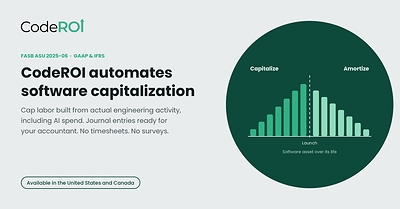
- Automatic schedules. CodeROI adds up costs while a project is being built, then spreads them over the software’s useful life once it launches, across many projects at once.
- Monthly entries, ready to post. Accounting entries your accountant can review and record.
- A look ahead. Optional planned launch dates preview future costs before a project goes live, kept separate from recorded figures.
The math is deterministic, meaning the same facts always produce the same answer, with no AI guessing at what probably happened. The same record also supports the R&D tax credit, Section 174 and Canada’s SR&ED program, so tax and accounting work from one set of facts instead of separate spreadsheets that disagree.
Does AI-written code count?
It can. When an AI tool writes code for a project that qualifies, what the company spends on that tool is part of the cost of building the software. Most processes only count people and miss it. CodeROI measures AI costs next to employee pay on the same projects, so the numbers reflect how software is really built today.
“Software capitalization has always been an estimate dressed up as a number. Finance asks engineering in December what everyone worked on all year, someone builds a spreadsheet, and the auditor is asked to trust it,” said Taylor Meadows, CPA, CEO of CodeROI. “The new FASB rule asks companies to show their judgment, not just their totals. CodeROI gives them actuals: what was built, on which project, by which person or AI tool, and what it cost, recorded while it happened.”
What does this mean for finance leaders?
- A faster close. Monthly entries arrive ready instead of being rebuilt each quarter.
- Numbers that hold up. Every capitalized dollar traces back to recorded work, not interviews.
- A truer picture of the business. Development costs move from the income statement to the balance sheet and are spread over the years the software is used, matching cost to the years it pays off.
- Less work for engineers. Teams keep their usual tools. CodeROI connects to where code lives and keeps engineering teams in their native tooling without asking for context switching to spreadsheets.
CodeROI records from the day a company connects, going forward. It does not rebuild past years from memory, which is what keeps the record credible. Companies that start now will have a full history in place well before the new rule takes effect. CodeROI does not use AI in its calculations or sourcing of data in order to maximize audit defensibility.
Availability
Expanded software capitalization is available now to CodeROI customers in the United States and Canada. Schedule a demo at CodeROI.com, where you can also estimate your potential savings.
About CodeROI
CodeROI is a deterministic, data-first software platform that automates software development tax incentives, software capitalization, and development compliance. CodeROI builds audit-ready evidence from engineering activity as it happens, supporting federal and state R&D tax credits (IRS Form 6765, including Section G), Section 174 deductions, Canadian SR&ED, and software capitalization under US GAAP (ASC 350-40) and IFRS. Learn more at CodeROI.com.
Sources
- FASB, ASU 2025-06, Targeted Improvements to the Accounting for Internal-Use Software (issued Sept. 18, 2025): replaces project stages with a test based on approval, funding and likely completion; effective for annual periods beginning after Dec. 15, 2027, early adoption permitted.
- IFRS Foundation, IAS 38 Intangible Assets: criteria for capitalizing development costs under IFRS.
CodeROI is a software platform, not a CPA firm, law firm, or financial advisor. This release is for general information only and is not tax, accounting, legal, or financial advice. Consult a qualified professional about your specific situation.
CONTACT: Press@CodeROI.com

 View original content to download multimedia:https://www.prnewswire.com/news-releases/coderoi-adds-ai-development-costs-to-software-capitalization-ahead-of-fasbs-new-rule-302935888.html
SOURCE CodeROI